
The vulnerability piece nobody mentions
Introducing a lemon vibrator or any clitoral vibrator to a new partner carries weight that solo use never does. You're not just talking about pleasure. You're saying: "This is what I like. This is what my body needs. I trust you enough to show you." And that terrifies a lot of people.
The fear isn't usually about the toy itself. It's the story you tell yourself the toy represents. That you're "high maintenance." That your partner will feel inadequate. That they'll judge you. That somehow needing external stimulation means you don't really want them.
None of that is true. But shame doesn't care about truth.
Here's what I've learned from couples who've navigated this successfully: the conversation matters more than the timing. And the conversation is actually simpler than you think.
Start before the bedroom
Don't introduce a lemon vibrator for the first time during sex. You're both already vulnerable, already focused on performance, already in your heads about whether things are "working." Adding a new variable then guarantees awkwardness.
Instead, bring it up during a regular conversation. Not a Big Serious Talk with capital letters. Just a casual moment when you're both relaxed. "I've been thinking about trying something, and I want to run it by you." Or: "I have this toy I love, and I'd like to use it with you. Would that be cool?" Short. Direct. No apologies.
What you're doing here is separating the information from the performance. Your partner gets time to sit with the idea before their body is involved. That matters for their comfort and for yours.
What to say (without overselling)
Most people overcomplicate this. They launch into justifications. "It's not about you." "It's just something I like." "A lot of couples do this." All of that might be true, but it sounds defensive. And defensive signals to a new partner that something is wrong.
Instead, lead with what it actually is: a tool that helps you feel good, and you'd like to share that with them.
"I use a clitoral vibrator sometimes. It feels really good. I'd like to try it while we're together, because I think it could be fun for both of us." Done. No explanation needed.
If they ask why, answer honestly. "Because it stimulates me in a way that gets me to orgasm faster" or "Because the sensation is different and I like the variety." You're not criticizing their touch. You're describing your body's preferences. There's nothing threatening about that.
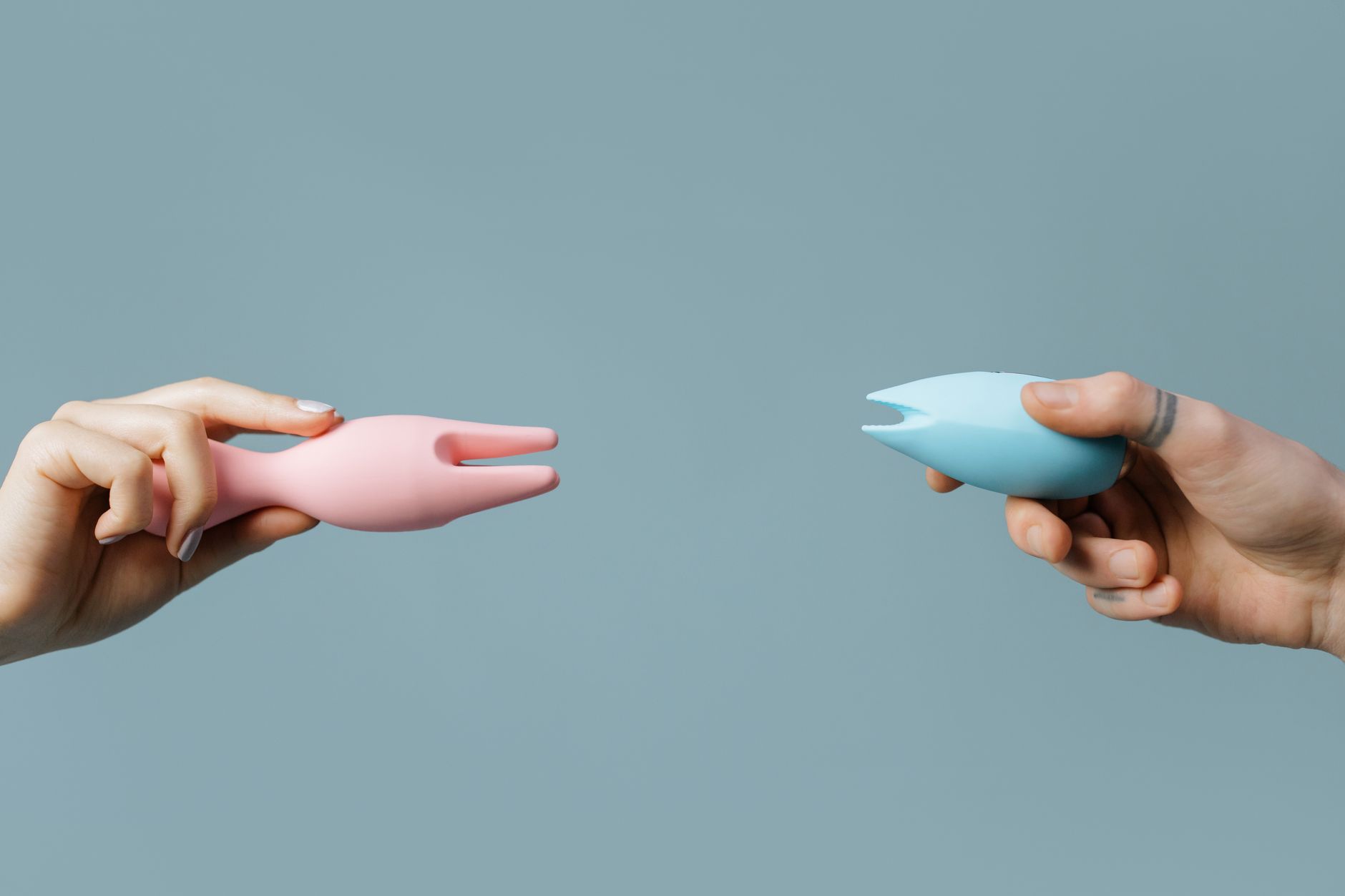
Photo by cottonbro studio on Pexels
The insecurity problem (and how to handle it)
Some partners will have a reaction. Not all of it will be rational. A new partner might worry that you're not satisfied with them, or that the toy means you're not really present, or that you'd rather be alone. Those are fears, not facts. But they're real feelings, and dismissing them shuts down communication.
If your partner expresses hesitation, listen first. "What's coming up for you about this?" is a real question, not a rhetorical one. Let them talk.
Then address the actual concern, not the surface one. If they're worried the toy means you don't enjoy sex with them, you get to say: "That's not it. I enjoy what we do together. This is just another thing I like." You're still present with them. The lemon vibrator doesn't replace that. It adds to it.
If they're worried it means you're not really attracted to them, you can be clear: "My body just responds well to this kind of stimulation. It has nothing to do with how I feel about you." That's true for most people. Your sexual responsiveness isn't a referendum on your partner's value.
Practical timing in the moment
Once you've had the conversation and they've agreed, the execution matters. You want to make the experience feel natural, not clinical.
Start with everything else first. Get aroused the way you normally would together. Use hands. Use mouths. Build the moment. Then, when you're already turned on and feeling connected, introduce the lemon vibrator. It should feel like a progression, not an interruption.
You could say, "I want to use this now" or just reach for it. Depending on how you are as a couple, either approach works. The key is that it's not a surprise. They already know it's coming.
Three ways to integrate it
Option 1: Solo focus, partner witness. You use the clitoral vibrator on yourself while they touch you elsewhere or watch. This is the least "coupled" version but often the easiest entry point. Your partner gets to see what feels good to you, which is genuinely sexy information.
Option 2: Partner-assisted. They hold the lemon vibrator for you or guide it while you give feedback. This keeps their hands involved and makes it a collaborative thing. "A little higher" or "keep it there" becomes intimate direction, not criticism.
Option 3: Dual stimulation. They use a vibrator on you while you use one on yourself, or they focus on other areas while you use the clitoral vibrator. This requires the most coordination but can feel really connected if you're both into it.
Start with Option 1. There's nothing wrong with solo focus during partnered sex. Plenty of couples do this regularly. Your orgasm matters. The way you get there matters.
The conversation after
Once you've done it, check in. Not in a clinical "how was that for you" way. Just: "Did you like that?" or "Want to do that again?" Casual. Open. If it was awkward, you can laugh about it. If it was good, you can say so.
Over time, using a lemon clitoral vibrator with a partner becomes just another thing you do. It stops feeling like a big negotiation and starts feeling like part of your sexual repertoire. Most couples find that ease within a few times.
When a partner says no
Sometimes they won't be into it. That's worth knowing early, honestly. A partner who's fundamentally uncomfortable with toys might soften over time, or they might not. That's data about compatibility. You get to decide if you can live with that boundary.
What you don't have to do is pretend you don't like vibrators to make them comfortable. Wanting external stimulation isn't a flaw. Liking a lemon vibrator doesn't make you broken or high-maintenance. If someone can't get on board with a basic part of your sexuality, that tells you something about whether this partnership has room for you.
Why this vulnerability actually builds intimacy
Here's the thing: showing a new partner what you like sexually is one of the fastest ways to build real trust. You're not performing for them. You're letting them see you. And if they respond with curiosity instead of judgment, you've got the beginning of actual intimacy.
The lemon vibrators and clitoral toys are just tools. The real thing you're sharing is honesty about your body and what it needs. That's the vulnerable part. That's also the part that makes everything better.
People also ask
Will using a lemon vibrator make my partner feel inadequate?
Not unless you frame it that way. A vibrator does something different than a hand or mouth. It's not better or worse. It's different. Most partners feel less threatened once they understand it's about neurological response, not satisfaction with them. Many partners actually find it hot to watch or participate in. Frame it as adding pleasure, not replacing them, and the insecurity usually dissolves.
When should I introduce a clitoral vibrator to a new relationship?
Whenever you're comfortable being vulnerable about your sexuality. For some people that's date three. For others it's month two. There's no universal timeline. What matters is that you feel safe enough to be honest and that your partner has had the conversation before their body is involved. If you wait until you're totally comfortable, you might never bring it up. Sometimes vulnerable communication happens first, comfort follows.
Can I use a lemon vibrator during partnered sex without it being weird?
Absolutely. Millions of couples do this regularly. It stops being weird the second time you do it. The first time feels heightened because everything is new. By the third or fourth time, it's just part of what you do. The weirdness is entirely in the setup conversation. Once that's done, the physical part is straightforward.
What if my partner wants to use a vibrator but I'm hesitant?
Take your time understanding why you're hesitant. Is it insecurity? Inexperience? A genuine boundary? Different things require different responses. If it's insecurity, that's worth exploring together. If it's genuinely not your thing, that's a real conversation about sexual compatibility. Don't agree to something that makes you uncomfortable just to keep the peace. That builds resentment, not intimacy.
Should I use lemon sexual toys alone before introducing them to a partner?
Ideally, yes. If you know how you like to be stimulated, you can direct your partner more effectively. You'll also feel more confident about it. But I also understand if someone wants to explore toys together with a new partner. Just make sure you're not using the first sexual experience together to figure out your own body. That puts a lot on both of you.